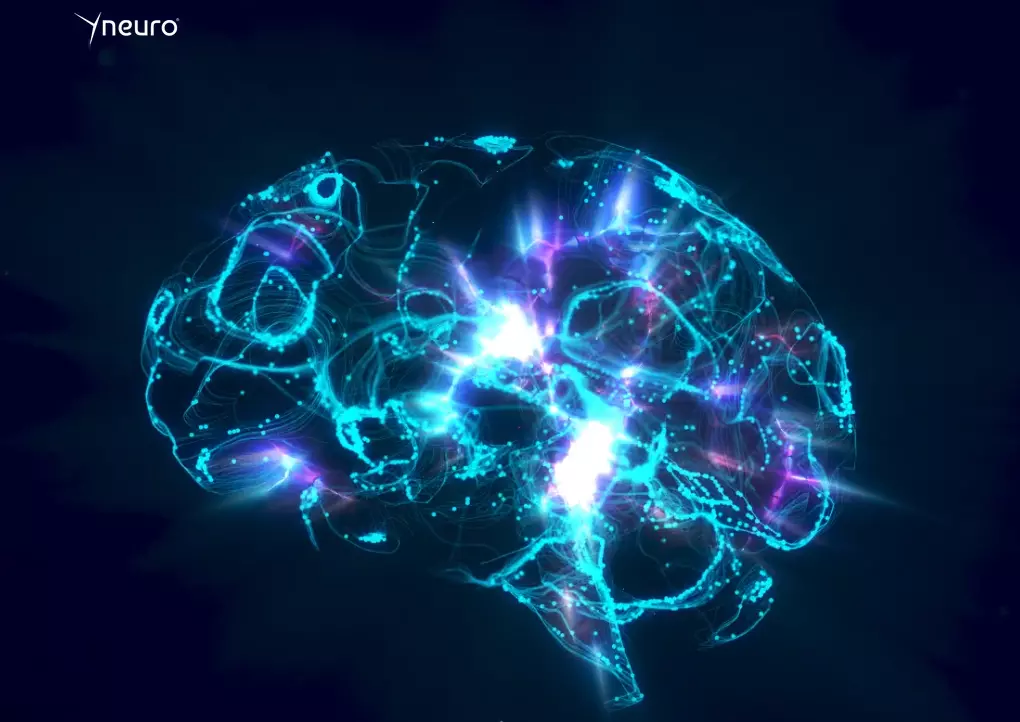
In 2026, as deepfakes deceive 78% of facial recognition systems, a French startup based at Station F is proposing a radical alternative: neural signature authentication. Yneuro has developed Neuro ID®,

60–65%: highly technical, expert-level / 70–75%: specialized business audience / 80–85%: accessible business content / 90%+: general public / popularized content
Key Takeaways
Traditional biometrics are becoming obsolete
Neuro ID®: a unique and dynamic neural signature
Continuous authentication with no conscious user action
A technology designed for the post-smartphone era
Massive real-world validation: 25,000 testers
A colossal market undergoing rapid transformation
Exceptional international recognition
In 2026, as deepfakes deceive 78% of facial recognition systems and biometric fraud continues to surge, a groundbreaking technology is emerging: neural fingerprint authentication. This innovation, led in particular by the French startup Yneuro, promises to redefine cybersecurity standards by leveraging what may be the most inviolable asset we possess: our brain activity.
Neural fingerprint authentication—also known as brain biometrics—represents a major technological breakthrough in digital security. Unlike traditional biometric methods that analyze external physical traits (fingerprints, facial features, iris scans), this revolutionary approach exploits the brain’s electrical activity to verify identity.
📊 100% — Identification reliability using brainwaves
Every human brain generates unique electrical signals, known as brainwaves or EEG signals (electroencephalogram). These neural patterns form an intrinsic biometric signature, as distinctive as a fingerprint—but with a crucial advantage: they are invisible, dynamic, and virtually impossible to reproduce or falsify.
By 2026, conventional biometric authentication systems face unprecedented security challenges. Deepfake technologies and generative AI have reached an alarming level of sophistication.
“Deepfakes can fool facial recognition systems in 78% of cases”
— Biometrie-online.net
Widely deployed facial recognition systems—used in airports, banks, and smartphones—now exhibit critical vulnerabilities:
Biometric manipulation: fake selfies and forged identification videos
KYC bypassing: deepfakes compromise banking identity verification
Voice identity theft: AI voice synthesis perfectly mimics vocal signatures
| Biometric Type | Security Level | Deepfake Vulnerability | Forgery Potential |
|---|---|---|---|
| Fingerprint | Medium | Low | High (molds) |
| Facial Recognition | Medium–Low | Very High (78%) | High (deepfakes) |
| Voice Recognition | Low | Very High | Very High (AI synthesis) |
| Iris/Retina | High | Medium | Medium |
| Neural Fingerprint | Very High | None | Near-impossible |
The French startup Yneuro positions itself as the European leader in neural authentication with its flagship solution Neuro ID®. Presented at CES 2026, the technology has already been tested by over 25,000 people, demonstrating large-scale viability.
“Unlike passwords, fingerprints, or facial recognition, our approach relies on the brain’s electrical activity to verify identity in an intrinsic and inviolable way.”
— Yneuro
Yneuro has developed a next-generation neuro-biometric technology capable of continuous identity verification, while fully respecting privacy and personal data. Neuro ID® leverages non-invasive neural signals captured through consumer devices such as headphones, wearables, and future embedded sensors.
Yneuro embodies the most advanced edge of the French Tech ecosystem. The company has succeeded in transforming complex neuroscience research into a seamless and accessible authentication solution for the general public.
Its key differentiators include:
A unique, dynamic neural signature validated in milliseconds
Non-invasive technology compatible with existing hardware
Absolute privacy protection: raw brain data is never stored
Neural fingerprint authentication relies on the analysis of brainwaves generated by natural neural activity. The process follows four main steps:
Non-invasive EEG sensors embedded in headphones, headbands, or smart glasses capture electrical activity at the surface of the skull, producing an electroencephalogram.
AI algorithms analyze brainwave patterns to extract a unique neural signature, integrating:
Alpha, beta, gamma, theta, and delta rhythms
Neural responses to external stimuli (images, sounds)
Resting-state and cognitive activity patterns
When access is requested, real-time brain signals are compared with the registered neural signature. The process takes only milliseconds and is entirely seamless.
Unlike one-off methods (e.g., fingerprint unlock), neural biometrics can operate continuously, verifying identity throughout the session without any conscious user effort.
Impossible to forge: brain activity remains hidden and cannot be copied
Intrinsic liveness detection: signals can only be generated by a living brain
📊 99% — Authentication accuracy using personalized EEG
No passwords to remember
Invisible authentication running in the background
Universal accessibility, including for users with physical limitations
End-to-end encryption from signal capture
No centralized storage of raw brain data
Algorithms extract only biometric features—not thoughts or emotions
High-risk transaction authentication
Secure access to professional accounts
Continuous trader authentication
📊 $48.9B by 2035 — Biometric payments market
Access to critical infrastructures
Protection of sensitive data
System administrator authentication
Secure access to electronic health records
Prescription authentication
Protection of connected medical devices
Access to classified facilities
Secure communications
Weapon system control
📊 $8.8B — Biometric authentication market size in 2026
📊 16% CAGR — Annual market growth
By 2030, the global biometrics market is expected to reach $120.18B, driven by regulation, cyber threats, and Zero Trust security models.
| Technology | Market Share | Growth |
|---|---|---|
| Fingerprint | 35% | +8% |
| Facial Recognition | 28% | +12% |
| Iris/Retina | 15% | +10% |
| Voice Recognition | 12% | +14% |
| Neural Biometrics | 5% | +45% |
| Others | 5% | +7% |
Despite representing only 5% of the market, neural biometrics are the fastest-growing segment.
Key challenges remain:
Sensor costs (expected to decline with consumer integration)
Standardization (ISO initiatives underway)
Social acceptance and ethical governance
Future innovations include:
Multimodal biometric fusion
Stress and coercion detection
Metaverse identity authentication
Ultra-miniaturized EEG sensors
📊 100% identification reliability via brainwaves
🔒 78% of facial recognition systems fooled by deepfakes
💰 $8.8B biometric market (2026)
📈 45% CAGR for neural biometrics
🧠 25,000 users tested Neuro ID®
Yneuro’s neural fingerprint authentication is far more than a technological novelty—it represents a paradigm shift in digital security. As deepfakes and sophisticated cyberattacks undermine traditional biometrics, brain-based authentication offers a near-inviolable alternative.
With Neuro ID®, Yneuro positions France at the forefront of this emerging field, transforming brain activity into a secure, invisible, and privacy-respecting digital key. While technical, regulatory, and societal challenges remain, the trajectory is clear: neural authentication is emerging as the security standard of tomorrow.
In a world where digital identity is as valuable as physical identity, truly inviolable authentication is no longer a luxury—it is a strategic necessity.
You should read this :
Why Investors Are Becoming Much More Demanding About Cyber Security Since NIS2
The great challenge of reading in France — why Zeaply is becoming the most advanced AI solution.
Advisor and Consultant to Business Leaders – Founder of GOWeeZ !
In 2026, as deepfakes deceive 78% of facial recognition systems, a French startup based at Station F is proposing a radical solution: neural signature authentication. Yneuro has developed Neuro ID®, a patented technology that analyzes the brain’s electrical activity through EEG sensors embedded in wearables (smart glasses, earbuds, AR/VR headsets).
Fabrice Clément Tweet